


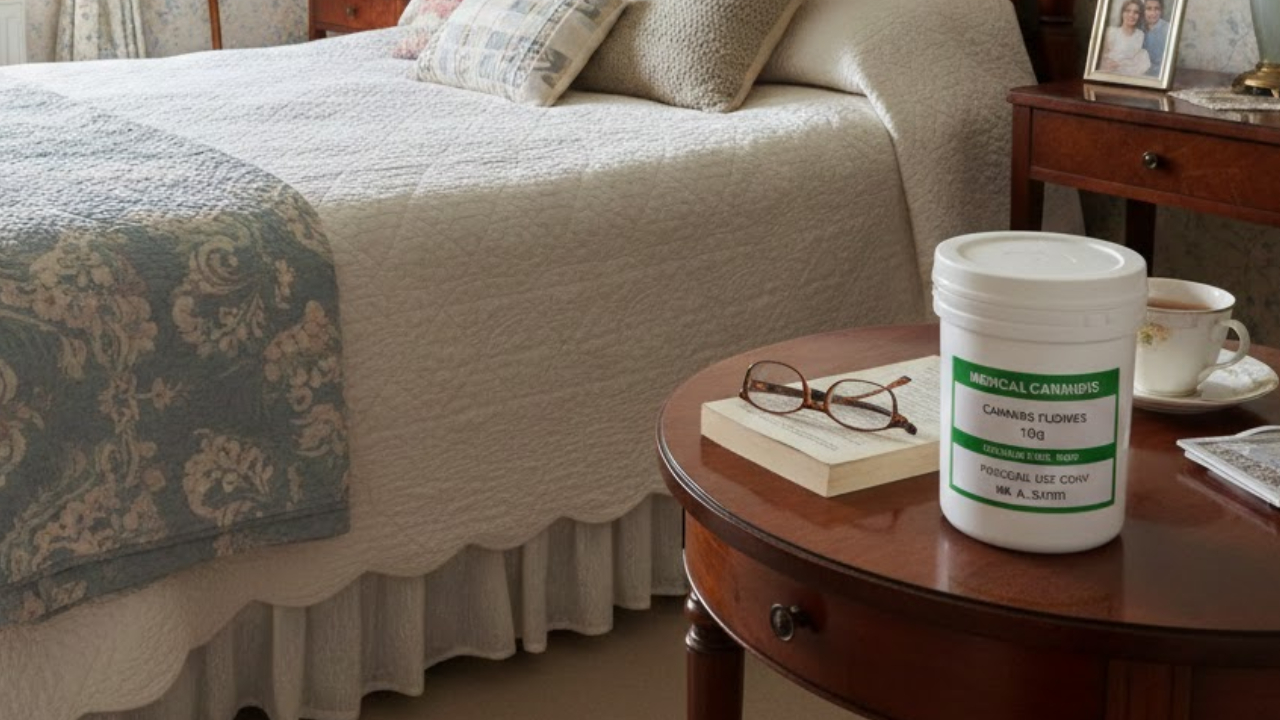
As people age, the possibility of developing conditions that cause chronic pain and sleep disturbance also rises. In the UK our population is ageing, and more people than ever are suffering from these conditions. Some 50% of people over the age of 65 in the UK live with chronic pain. Older patients are also more likely to experience unwanted side effects of pharmaceuticals, especially with long-term health problems.
In this context, legal and prescribed medical cannabis is an emerging area of interest for clinicians and patients. The results have been impressive in patient led studies on chronic pain in particular, and emerging research is looking into cannabinoids for treating Alzheimer’s and other dementia causing diseases. Yet, for many of the same reasons, older patients present specific physiological and cognitive considerations that make clinical treatment plans and ongoing research even more important.
Chronic Pain is Common in Older Adults and the Most Common Cannabis Prescription
Since the UK legalised in 2018, chronic pain has been the condition most medical cannabis patients seek it out for. In older people, long-term chronic pain can be very stressful and is often be multifaceted. After a life time of wear and tear, damage can accumulate in many places with musculoskeletal degeneration, neuropathic pain, and inflammatory conditions among the most commonly diagnosed conditions in British over 65s.
Opioid-related adverse events are known to increase in the over 75s particularly. Meanwhile observational studies of medical cannabis patients have shown that treatment increases the chances that patients reduce or even stop opioid use.
Medical cannabis does not cure chronic pain. But it can have considerable effects on improving patient pain management. In one large scale study of UK patients at one clinic, 97% of of some 1200 patients with long-term pain said their quality of life improved after starting treatment. More randomised control trial data is needed, but even in those kinds of studies results are increasingly promising.
Licensed clinics like Releaf UK will help even less tech aware older people through the whole prescription process. Clinical practitioners guide prospective patients through initial consultation and eligibility checks all the way to treatment plans, prescription filing, delivery and follow up care.
Sleep Disorders and Cannabinoid Pharmacology
The way people sleep changes as they age. Older people, in general, see less deep sleep and can often awake more at night. This is often intensified by chronic pain. In some studies, up to half of all adults aged over 65 report some kind of insomnia or disturbed sleep.
Modern medicine has prescribed Benzodiazepines and Z-drugs (sleeping pills) to treat these issues. However, these can be habit forming and may also result in increased risk of falls among older patients. With more fragile bones and joints, that can lead to fractures or other long-term injuries.
Medical cannabis has been shown in some studies to reduce patients’ time to sleep and the frequency of disturbed sleep, especially with lower doses. However, the long term effects on quality of deep sleep (REM) are less clear. Nevertheless, the evidence suggests cannabis oils and other medications can be an effective sleep aid when pharmaceuticals prove unsuitable.
Medical cannabis is less blunt force effective at reliably inducing sleep than Z-drugs. Instead it promotes the release of hormones like adenosine and melatonin which regulate tiredness and sleep, via the body’s endocanabinoid system. The two main compounds (cannabinoids) in the cannabis plant – THC and CBD – have slightly differing effects on sleep, and it is also an area where dosage is important.
The complex workings of cannabis are another reason that a carefully formulated treatment plan and tailored medicinal product is important – especially in older people. Resources like Alternaleaf UK reviews are helpful for prospective patients looking into medical cannabis as an option, because there are dozens of clinics now available in the UK so picking the right one for individual circumstances is important.
Cutting Edge Research Shows Promise for Dementia and Alzheimer’s Symptoms
One interesting area of research for older individuals and countries with ageing populations is medical cannabis for treating dementia symptoms – particularly Alzheimer’s disease.
In the UK, around a million people have some kind of degenerative dementia and it is often a seriously debilitating or even fatal condition. Especially with other old age comorbidities. In fact, it is one of the leading causes of death in the UK.
While it must be stressed there is no clinical evidence that cannabis can prevent or reverse the progression of dementia, early clinical trials are looking promising at treating at least some of the more stressful symptoms such as agitation, restlessness, lack of appetite and insomnia.
Recent studies in Brazil even saw improvements with microdosing low concentrations of CBD and THC, in a medium-sized randomised control trial of 24 patients with mild Alzheimer’s. This research is even more promising, because psychoactive THC medicines must be considered very carefully with dementia patients who can become aggressive or upset when confused.
These trials are among the first looking at microdosing (less than 1mg) of cannabinoids for any therapeutic effect, let alone for something as critical as dementia. There are also ongoing studies into medical cannabis for other neurodegenerative conditions like Parkinson’s and musculoskeletal issues like arthritis.
- How Can RV Travelers Find a Peaceful, Full-Hookup RV Park Near Greenville? Shibby RV Living Offers a Simpler Stay
- How to Compare Search, Scraping, Crawling, and Extraction Tools for AI Agents
- How To Build A Practical Home Medical Supply Plan For Safer Daily Care In Sarasota, Florida
- Andrew Sorial: Why Psychiatrists Should Collaborate with Other Healthcare Providers
- Medication Errors And Medical Malpractice Claims
Key Takeaways Shibby RV Living is located in Woodruff, South [...]
Key Takeaways Search, scraping, crawling, and extraction serve different stages [...]

Key Takeaways Build the supply plan around daily care tasks. [...]
Andrew Sorial is a board-certified psychiatrist based in Boca Raton, [...]
Key Takeaways Medication errors do not automatically establish medical malpractice, [...]
Key Takeaways Primary care is often the best starting point [...]
Modern Approaches to Spine Pain Relief
How Non-Invasive Technology Is Shaping Modern Weight Management
Understanding the Healing Process for Ankle Wounds