


Table of Contents
- Introduction
- Rising Age of First-Time Homebuyers
- Increased Cash Purchases
- Preference for Smaller, Modern Homes
- Impact of Remote Work on Housing Preferences
- Regional Market Variations
- Government Incentives and Sustainable Housing
- Resourceful Navigation in a Changing Market
- Conclusion
Introduction
The U.S. real estate market in 2026 is experiencing dynamic changes driven by shifts in buyer demographics, evolving lifestyle needs, and rapid advancements in housing technology. Buyers and sellers alike are paying close attention to new trends shaping purchasing priorities and home valuations. For those navigating this environment, partnering with established experts like Easton MD real estate experts Benson & Mangold Real Estate can make a significant difference. Benson & Mangold Real Estate is one of the largest, most experienced independent brokerages serving Maryland’s Eastern Shore. Leveraging deep roots in the Easton and Chesapeake Bay region, the company brings over 50 years of local expertise, a robust network of agents, innovative marketing strategies, and a wide inventory that speaks directly to today’s market demands.
Understanding the evolving preferences and pressures facing homebuyers is crucial for anyone looking to make informed real estate decisions in 2026. Whether you’re a first-time buyer, a repeat investor, or considering placing your property on the market, the following breakdown explores the most important trends to watch this year.
Rising Age of First-Time Homebuyers
One notable trend this year is the rising age of first-time homebuyers. The median age has climbed to 38, compared to 35 just last year. This uptick is closely tied to record-high home prices, tightening inventory, and higher barriers to entry for younger buyers. As a result, many individuals are focusing on accumulating sufficient savings and improving credit profiles before entering the competitive housing market. Additionally, ongoing student debt and wage stagnation have caused millennials and Gen Z buyers to delay their first purchase longer than previous generations. This evolving demographic profile is influencing everything from the types of homes in demand to preferred locations and amenities.
Increased Cash Purchases
Another headline trend for 2026 is the sharp increase in cash home purchases. This year, all-cash sales account for an estimated 26 percent of all transactions, the highest level on record. Unlike first-time buyers, many repeat purchasers and investors are benefiting from accumulated home equity or liquid assets, allowing them to outbid mortgage-dependent buyers. Cash offers often appeal to sellers by reducing transaction risk and shortening closing timelines. This competitive advantage can be a deciding factor in tight markets, especially for desirable properties in move-in-ready condition.
Preference for Smaller, Modern Homes
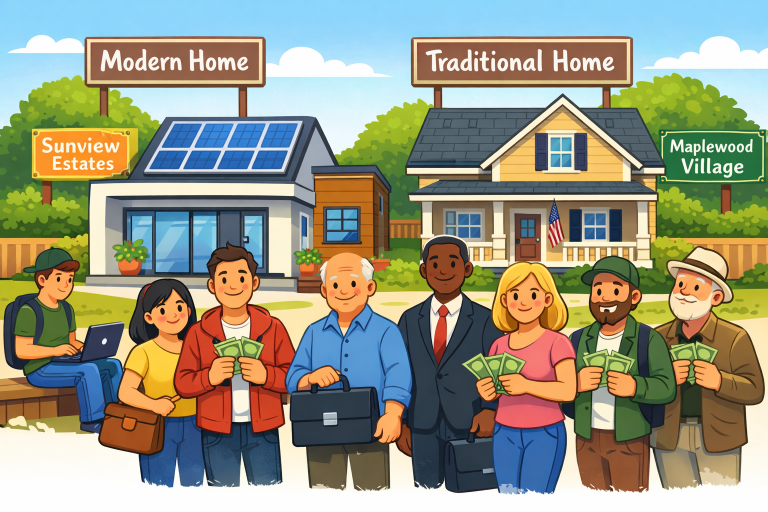
Today’s buyers are showing a clear shift toward smaller, more practical homes that blend contemporary design with functionality. Minimalist layouts, open floor plans, and low-maintenance materials appeal to younger buyers who value efficient space use and modern aesthetics. These homes not only align with evolving lifestyle trends but also address broader affordability concerns. Developers and builders are responding with innovative new builds and renovated properties that maximize comfort, convenience, and sustainability.
Impact of Remote Work on Housing Preferences
The continuing prevalence of remote and hybrid work arrangements is leaving a major footprint on housing preferences. More homebuyers are seeking properties with dedicated offices, high-speed internet access, and flexible living areas that accommodate work-from-home needs. Larger outdoor spaces, proximity to parks and recreation, and neighborhoods that offer a blend of quiet and convenience are becoming top priorities. As Americans reevaluate their definition of work-life balance, suburban and exurban markets that offer greater space without sacrificing connectivity are experiencing renewed interest.
Regional Market Variations
While many trends are national in scope, the U.S. real estate landscape is highly localized. For example, cities in the Rust Belt and Midwest, such as Buffalo, Cincinnati, and Cleveland, have emerged as some of the hottest markets in 2026. These regions are attracting buyers with affordable home prices, resilient job markets, and growing amenities. Meanwhile, some coastal and Sun Belt markets are seeing slower growth or price corrections after recent pandemic-era booms. Tracking local inventory, economic trends, and migration patterns is essential for buyers and sellers seeking to make sound investments and timely moves.
Government Incentives and Sustainable Housing
A push for more sustainable, energy-efficient living is fueling both government action and private-sector innovation. Federal and state programs are increasingly offering grants, tax credits, and preferred financing to buyers interested in energy-efficient, environmentally conscious homes. These incentives have spurred demand for properties with solar panels, green building materials, and advanced climate-control systems. Developers are responding with more eco-friendly new construction and renovations, and buyers who invest in sustainability often benefit from lower utility costs and potential increases in property value.
Resourceful Navigation in a Changing Market
Given these significant shifts, it is more important than ever to rely on expert advice and accurate market data. Whether you are searching for your ideal first home, seeking to trade up or downsize, or evaluating investment opportunities, the modern housing market favors thorough research and flexible strategies. Buyers and sellers who stay ahead of trends, engage with reputable professionals, and approach transactions with a well-informed mindset are best positioned for success.
Conclusion
The real estate market of 2026 is defined by adaptability, innovation, and evolving buyer priorities. Rising first-time buyer ages, the dominance of cash purchases, a preference for efficient homes, and a focus on sustainability are all reshaping the landscape. Meanwhile, regional differences and government policies continue to create both challenges and opportunities. By partnering with experienced local experts and staying attuned to these trends, buyers and sellers can confidently and effectively navigate today’s complex housing market.
- How to Build a Men’s Shirt Rotation That Works All Year
- A Practical Checklist for Buying an Investment Property in Northwest Florida
- A Checklist for Choosing a Tooth Replacement Plan in Rapid City, SD
- How Can RV Travelers Find a Peaceful, Full-Hookup RV Park Near Greenville? Shibby RV Living Offers a Simpler Stay
- How to Compare Search, Scraping, Crawling, and Extraction Tools for AI Agents
A reliable shirt rotation makes getting dressed easier because each [...]

Buying an investment property in Destin, Fort Walton Beach, Niceville, [...]

Replacing a missing tooth is not simply a matter of [...]

Key Takeaways Shibby RV Living is located in Woodruff, South [...]

Key Takeaways Search, scraping, crawling, and extraction serve different stages [...]

Key Takeaways Build the supply plan around daily care tasks. [...]
A Practical Checklist for Buying an Investment Property in Northwest Florida
Common Family Law Issues in New Hampshire and How to Handle Them
A Practical Guide To Comparing Senior Living Options For Families