


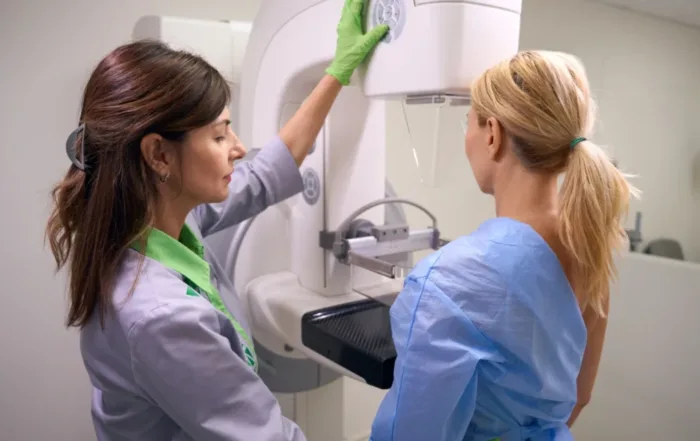
A breast exam performed by a qualified healthcare professional is an in-office screening that supports early detection and ongoing monitoring of breast health. A clinical breast cancer screening exam can help identify visible or palpable changes and guide next steps when symptoms are present. Here’s more information on the benefits of a clinical breast cancer screening exam:
Detecting Changes Early
A clinical breast exam provides an opportunity to identify changes in the breast that may develop between mammogram appointments. Healthcare providers are trained to detect subtle abnormalities during manual examination, and they can identify lumps, tissue irregularities, or other changes that require further investigation.
Some breast cancers grow rapidly and may appear between scheduled mammograms. Clinical breast exams can detect these changes early, when treatment options are most effective. This is especially helpful for women with dense breast tissue, where mammograms may be less effective at detecting certain abnormalities.
Building Breast Self-Awareness
Better breast self-awareness and patient education are fundamental components in improving early detection and overall breast health management. Key aspects of breast self-awareness include:
- Understanding the normal look and feel of one’s breasts to detect any unusual changes early.
- Receiving guidance from healthcare providers on how to perform effective self-examinations.
- Being informed about individual risk factors, including family history, age, and lifestyle influences.
- Staying educated on the benefits and limitations of various screening techniques, such as mammograms and ultrasound.
Patients can take an active role in their breast health and collaborate more effectively with healthcare professionals through knowledge and awareness. This enables timely and accurate interventions.
Assessing Risk Factors
Clinical breast exams allow healthcare providers to assess your individual breast cancer risk factors. They can review your personal and family medical history during these appointments, and this information can help them recommend an appropriate screening schedule tailored to your specific needs. Women with higher risk factors may require more frequent examinations or other screening methods.
Your provider can identify these risk factors during clinical breast exams and adjust your screening plan accordingly. They may recommend starting mammograms earlier than standard guidelines suggest or recommend scheduling more frequent clinical examinations. This personalized approach makes sure your screening plan matches your risk level.
Supporting Access and Continuity
Clinical breast exams serve as a backup in breast cancer screening. They provide a detection method if you miss a scheduled mammogram or face barriers to accessing imaging. This makes sure patients have reliable access to care, appropriate follow-up, and seamless continuity of care. Key elements of this backup include:
- Timely Scheduling: Providing prompt appointments to address patient concerns without unnecessary delays.
- Clear Communication: Making sure patients understand the results of their screenings and any recommended next steps.
- Follow-Up Coordination: Tracking patient progress and confirming follow-ups are scheduled and completed as needed.
- Continuity of Care: Facilitating a smooth transition between providers or specialists when further care is required.
- Proactive Outreach: Reaching out to patients who may miss appointments or need reminder notifications to stay engaged in their care.
These components are integral to fostering a healthcare environment where patients feel supported and informed at every step.
Schedule Your Breast Exam Today
Clinical breast exams offer multiple benefits as part of a comprehensive breast cancer screening strategy. They complement mammograms by detecting changes between imaging appointments and providing educational opportunities. These examinations allow for personalized risk assessment and create a safety net for continued breast health monitoring. Contact a qualified healthcare provider near you to schedule your clinical breast cancer screening exam today.

Ongoing care with a sinus and nasal specialist is necessary [...]

Headaches are a common ailment affecting nearly everyone at some [...]

Aesthetics represents a specialized field dedicated to improving appearance and [...]

A sports physical is also called a pre-participation physical examination [...]
A breast exam performed by a qualified healthcare professional is [...]

Seborrheic keratosis is a noncancerous skin growth, and it typically [...]
Modern Smiles: How Orthodontists Shape Confidence & Oral Health
Exploring the Benefits of Dog Daycare
Lifestyle Tips for Better Work-Life Balance