


For many people, nightlife is not simply about going somewhere for a few hours. It can be a way to discover new music, meet people, celebrate an occasion, or experience a different side of a city. Some events are small and relaxed, while others are designed on a much larger scale. Circuit parties belong to this larger category of organized nightlife and have developed a distinctive place within American entertainment culture.
The term can attract curiosity because it is often connected with a particular style of event, but there is much more to the subject than what happens on a dance floor. Circuit parties have a long cultural background, and their development is connected with changes in LGBTQ+ social spaces, nightlife, travel, entertainment, and community gatherings.
Over the years, these events have also become part of destination nightlife. People may plan trips around major celebrations, meet friends they know from other cities, or use an event as an opportunity to explore a new destination. For organizers, creating such an experience involves much more than booking a venue. Music selection, event design, staffing, crowd management, marketing, and guest experience all play a role.
Understanding circuit parties can therefore help both newcomers and regular attendees. A person who is unfamiliar with the term may want to know what it means, while an experienced nightlife fan may be interested in its history and changing culture.
This guide looks at the subject from a broad and practical perspective. It explains the origins of the term, how circuit party culture developed, what makes these events different from other forms of nightlife, and what attendees should consider before participating. It also examines how technology, changing social attitudes, and modern event planning are shaping the future of this unique nightlife tradition.
What Is a Circuit Party?
A circuit party is a large organized dance event that typically follows a specific theme, occasion, or community-focused concept. The event may take place in a nightclub, hotel, convention space, outdoor venue, or another large entertainment location.
The word “circuit” refers to a connected series of events rather than one particular party. Some attendees regularly move between major events in different cities, creating a network of nightlife experiences. This travel pattern is one of the reasons the term became associated with a wider party circuit.
Many circuit parties are connected with LGBTQ+ nightlife, particularly gay men’s social and dance culture. However, the audience is not identical at every event. Some gatherings are specifically designed for LGBTQ+ communities, while others may welcome a broader group of attendees.
Music is usually a major part of the experience. Electronic dance music is common, and events may feature professional DJs who perform extended sets. Depending on the organizer, the entertainment program can also include dancers, live performers, drag artists, visual presentations, themed shows, or guest appearances.
Another defining feature is the scale of the production. Instead of treating music as the only attraction, organizers may create an entire environment around it. Stage design, lighting, sound systems, video screens, decorations, and themed spaces can all contribute to the atmosphere.
Some circuit parties are single-night events, while others are part of multi-day celebrations. A weekend program may include several separate gatherings, such as daytime activities followed by evening parties.
The exact format varies considerably. There is no universal rule saying that every circuit party must have a particular venue, dress style, audience, duration, or entertainment lineup. What connects these events is their large-scale, organized nature and their place within a broader nightlife and social network.
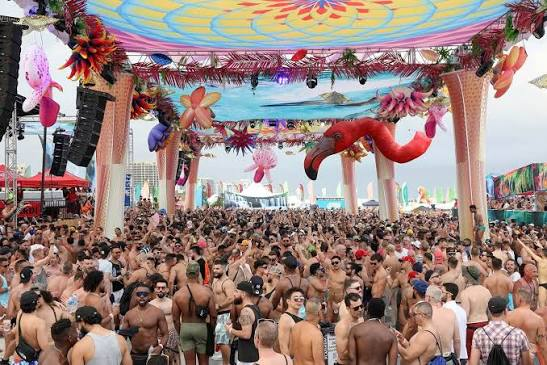
In the United States, circuit parties can also be associated with major holidays, Pride-related celebrations, charitable events, and destination nightlife. Their continued popularity shows how a dance event can become more than entertainment when music, community, travel, and shared experiences come together.
Circuit Party Meaning and Definition
The simplest circuit party definition is a large-scale dance event that focuses heavily on music, social interaction, and an immersive nightlife environment.
The word “circuit” can be understood as a route or network. In nightlife culture, it can describe a series of major events that attract many of the same communities and participants throughout the year.
A circuit party often has several recognizable characteristics:
- Large crowds
- Electronic dance music
- Professional DJs
- Extended dancing
- Large venues
- Themed decorations
- Advanced lighting and sound
- Visual effects
- Costume or fashion themes
- LGBTQ+ community connections
- Multiple related events
- Travel between cities or destinations
However, not every large LGBTQ+ party is automatically a circuit party.
Size alone does not define the experience. The culture, event structure, music, community, and relationship to a broader nightlife network are also important.
How Circuit Parties Started
The modern circuit party developed from LGBTQ+ nightlife communities in the United States during the late 20th century.
Before social media and dating apps became part of everyday life, large gatherings gave LGBTQ+ people opportunities to meet others outside their immediate neighborhoods. For people living in areas where LGBTQ+ nightlife was limited or unsafe, major events could provide a powerful feeling of belonging.
Holiday weekends and fundraising events played an important role in the development of this culture. As certain parties became more popular, attendees began traveling to them from other cities and states.
Over time, organizers created recurring events with recognizable themes and identities. DJs also became increasingly important because electronic dance music provided a continuous soundtrack for long periods of dancing.
The culture eventually developed into a national and international network.
This history matters because a circuit party is more than loud music and a crowded dance floor. For many participants, the experience has roots in community building, visibility, friendship, celebration, and freedom of expression.
The Evolution of Circuit Party Culture
Circuit party culture has changed significantly over the years.
Early events were often connected closely to specific LGBTQ+ communities and fundraising organizations. Later, commercial nightlife became more influential. Large promoters began creating professional productions with sophisticated stages, lighting systems, dancers, performers, and internationally known DJs.
The internet changed the way people discovered these events.
Social media then changed the process even further. An event could build an audience across the country without depending only on local advertising.
Modern circuit parties can now combine several different experiences. A weekend may include:
- A welcome party
- Pool parties
- Club nights
- Main dance events
- Brunches
- Drag performances
- Live entertainment
- Recovery or wellness activities
- Community gatherings
- Closing parties
This evolution has made circuit parties more similar in some ways to music festivals.
At the same time, traditional elements remain important. Music, dancing, community, fashion, and social connection continue to be central.
Why Are Circuit Parties Popular?
There is no single reason people attend circuit parties.
For some people, the attraction is music. A major DJ and a powerful sound system can create an experience that is very different from listening to music at home.
For others, the social environment is the main attraction.
A person may attend because friends are going. Someone else may travel alone because they want to meet new people. Another attendee may simply enjoy dancing in a large crowd.
There is also an emotional element.
Many LGBTQ+ people have experienced environments where they felt pressure to hide parts of themselves. A welcoming event can provide a temporary space where self-expression feels easier.
This does not mean every person experiences a circuit party in the same way. Some attend primarily for entertainment. Others care deeply about the community aspect.
The strongest events usually succeed because they combine both.
Circuit Party Music
Music is one of the most important parts of a circuit party.
Electronic dance music is particularly common because it works well for long periods of dancing. Depending on the event and DJ, attendees may hear house, progressive house, techno, tribal house, vocal dance music, and other electronic styles.
The music is often structured around energy rather than traditional song formats.
A DJ may gradually increase intensity, change the rhythm, introduce dramatic transitions, or create a long musical journey.
This is important in a large event because the music helps control the atmosphere.
A well-designed set can make a crowd feel energetic without requiring constant changes in scenery.
The Role of the DJ
At a major circuit party, the DJ is more than someone who plays songs.
The DJ helps shape the emotional direction of the event.
A skilled DJ pays attention to the crowd and adjusts the music accordingly. They may begin with a slower or more atmospheric sound and gradually build toward a high-energy section.
Large events may also feature multiple DJs.
Each performer can bring a different style. This creates variety while keeping the overall event connected.
For many attendees, the DJ lineup is one of the first things they check before buying a ticket.
What Does a Circuit Party Look Like?
A circuit party can look very different depending on the organizer and location.
Some take place in large nightclubs. Others use convention centers, outdoor festival grounds, warehouses, hotels, or special event spaces.
A large production may include:
- Main stages
- LED screens
- Moving lights
- Lasers
- Fog effects
- Video projections
- Elevated platforms
- Dance performers
- Themed decorations
- VIP areas
The goal is usually to create an immersive environment.
Instead of simply placing a DJ in front of a dance floor, organizers often build a visual world around the music.
That production is one reason major circuit events can feel more like festivals than ordinary nightlife.
Circuit Party Dress Codes and Fashion
There is no universal circuit party dress code.
Some events have specific themes. Others allow attendees to wear whatever makes them comfortable.
Fashion can be an important form of self-expression. People may choose colorful outfits, athletic clothing, costumes, creative designs, or minimal clothing depending on the event and its rules.
However, a common mistake is assuming that there is one “correct” way to dress.
There is not.
The best approach is to read the event’s official guidelines before attending. A venue may have rules regarding shoes, costumes, masks, exposed skin, bags, or accessories.
Comfort is also important because attendees may be standing or dancing for hours.
Are Circuit Parties Only for Gay Men?
No.
Circuit parties have historically had strong connections to gay male communities, but they are not universally restricted to gay men.
Many events welcome a broader LGBTQ+ audience, including lesbian, bisexual, transgender, queer, and nonbinary attendees. Some events are specifically designed to be more inclusive.
The exact audience depends on the event.
If you are considering attending, check the organizer’s description rather than relying on stereotypes.
Are Circuit Parties LGBTQ+ Events?
Many are.
The connection between circuit parties and LGBTQ+ nightlife is one of the defining features of the culture.
Some events are explicitly LGBTQ+ gatherings. Others are connected to Pride, community organizations, charitable fundraising, or queer nightlife.
However, the term can also be used more broadly for large dance events outside LGBTQ+ communities.
Context matters.
When someone in the United States says “circuit party,” they are often referring to the LGBTQ+ nightlife tradition, but the exact meaning can vary.
Circuit Parties and Community
One of the most valuable aspects of circuit party culture is community.
Large gatherings can connect people who live hundreds or thousands of miles apart.
Someone from a small town may attend an event and suddenly find themselves surrounded by people who share similar experiences.
That can be meaningful.
The social value of these events should not be overlooked simply because they are associated with nightlife.
For some attendees, friendships made at these gatherings continue long after the music stops.
Circuit Parties and Fundraising
Historically, fundraising has been closely connected to parts of circuit party culture.
Some events have raised money for LGBTQ+ organizations, HIV-related programs, health services, community groups, and other causes.
This relationship developed partly because nightlife provided a practical way to bring large numbers of people together.
A successful event could generate money while also providing entertainment.
Not every modern circuit party is a fundraiser, however.
If charitable giving is important to you, look for transparent information from the event organizer about where proceeds go.
Circuit Party Weekend Experience
A modern circuit party may be part of an entire weekend rather than a single night.
For example, an event weekend might look something like this:
Friday could include a welcome gathering.
Saturday could feature a daytime pool event followed by the main nighttime party.
Sunday might include another daytime event and a closing celebration.
Some destinations may offer activities outside the official program.
This creates a festival-like experience.
It also means attendees should plan carefully.
Trying to attend every event can lead to exhaustion. A better approach is to choose the activities that matter most to you and leave time for rest.
How Long Does a Circuit Party Last?
There is no standard length.
A single party may last several hours. A major weekend event can continue across several days.
The dancing portion of a large event may extend late into the night or early morning.
Because of this, preparation matters.
People who try to stay active continuously without eating, drinking enough nonalcoholic fluids, sleeping, or taking breaks can put unnecessary strain on their bodies.
Rest should be considered part of the experience, not a failure to participate.
Circuit Party Safety
Safety should be treated as a normal part of planning any large nightlife event.
Large crowds create challenges that do not exist in smaller gatherings.
Before attending, know:
- Where the exits are
- How to contact friends
- Where medical staff are located
- How you will get home
- What identification you need
- What items the venue prohibits
- Where you can find water
- Where you can take a break
It is also helpful to tell a trusted friend where you will be.
If you become separated, having a meeting point can make reconnecting easier.
Staying Hydrated
Dancing for hours can increase fluid loss, especially in warm or crowded environments.
Drink water regularly and pay attention to how you feel.
Avoid treating water as something you only need after becoming extremely thirsty.
If the venue offers electrolyte drinks or other appropriate nonalcoholic options, they may also be useful during extended physical activity.
At the same time, excessive water consumption can be dangerous. The goal is balanced hydration rather than drinking as much water as possible.
Alcohol and Circuit Parties
Some circuit parties are held in venues where alcohol is available, while others have different policies.
If you choose to drink, moderation can help you remain aware of your surroundings.
Alcohol can affect judgment, balance, and your ability to recognize warning signs of physical distress.
Never assume that a person who appears intoxicated is automatically having a good time. Look out for friends and respect people’s boundaries.
Also arrange transportation before drinking.
Designated drivers, rideshare services, public transportation, or a nearby hotel can all be safer alternatives to driving after drinking.
Drug Safety and Circuit Parties
Drug use has been associated with some nightlife environments, but it is not a requirement for attending a circuit party.
If someone chooses to use drugs despite the risks, there can be serious dangers, including unknown substances, contamination, dangerous interactions, overheating, dehydration, impaired judgment, and overdose.
A particularly important concern is mixing substances.
Combining drugs with alcohol or other substances can produce unpredictable effects.
People should also be aware that emergency medical professionals are there to help. If someone is experiencing a medical emergency, getting professional help quickly is more important than worrying about embarrassment or judgment.
Consent and Personal Boundaries
Consent is essential at any social or nightlife event.
A crowded environment does not remove someone’s right to personal space.
Do not assume that someone’s clothing, dancing, flirting, or presence means they want physical contact.
Ask when appropriate.
Respect the answer.
If someone moves away, says no, looks uncomfortable, or otherwise communicates that they do not want contact, stop.
A good circuit party experience depends on people feeling safe enough to enjoy themselves.
Sexual Health at Circuit Parties
Because circuit parties may involve adults meeting new people and forming social or intimate connections, sexual health can be an important consideration.
People should make informed decisions about their own health and communicate openly with partners.
Depending on personal circumstances, people may consider:
- Barrier protection
- Regular sexual health testing
- Vaccinations recommended by healthcare professionals
- HIV prevention options when appropriate
- Honest communication with partners
Sexual health decisions are personal, and reliable medical advice should come from qualified healthcare professionals.
The important principle is simple: nightlife should not replace responsible health decisions.
Mental Well-Being at Circuit Parties
Large events can be exciting, but they can also be overwhelming.
Crowds, loud music, bright lights, long nights, travel, and social pressure can affect how someone feels.
It is perfectly acceptable to step away.
You do not need to stay on the dance floor all night.
Taking a quiet break, sitting with a friend, eating a meal, or returning to your hotel can help you reset.
There is also no need to compare your experience with photographs or videos posted online.
Social media usually shows the most exciting moments. It rarely shows the tiredness, quiet breaks, missed events, or ordinary parts of a weekend.
Circuit Party Etiquette
Good etiquette can make the experience better for everyone.
Respect the venue.
Respect performers.
Respect other attendees.
Follow security instructions.
Keep walkways clear.
Do not push through crowds unnecessarily.
Avoid unwanted touching.
Do not photograph people in sensitive situations without permission.
If the event has a dress, photography, or behavior policy, follow it.
Small acts of consideration can have a major effect in a crowded environment.
How to Prepare for Your First Circuit Party
If this is your first circuit party, preparation can reduce stress.
Start by learning about the event.
Check the official event information for:
- Date and time
- Venue
- Entry requirements
- Ticket information
- Dress guidelines
- Bag policies
- Transportation
- Age requirements
- Event schedule
- Accessibility information
Then plan your transportation.
Do not wait until the event ends to figure out how you are getting home.
It is also useful to wear comfortable shoes unless the event specifically requires something else.
Bring only what you need.
Large bags can become inconvenient in crowded environments.
What Should You Bring?
Your exact needs depend on the venue.
Common useful items include:
- Identification
- Phone
- Phone charger or portable battery
- Ticket or digital pass
- Comfortable clothing
- Comfortable shoes
- Money or payment method
- Any necessary personal medications
- Water when permitted by venue rules
Always check the venue’s prohibited-items list before arriving.
What Should You Not Bring?
Avoid bringing unnecessary valuables.
Large bags, expensive accessories, and items prohibited by the venue can create problems.
Do not bring anything that violates local law or event rules.
The simplest approach is usually the best: carry what you genuinely need and keep your belongings secure.
Choosing a Circuit Party
Not every event will be right for every person.
Before purchasing a ticket, think about what you actually want.
Are you interested in music?
Do you want a social experience?
Are you looking for a Pride-related event?
Do you prefer a large festival environment or a smaller gathering?
Does the event have accessibility features you need?
Does the venue have a good reputation for crowd management?
Researching these questions can help you choose an event that matches your expectations.
How Much Do Circuit Parties Cost?
Prices vary greatly.
Factors can include:
- City
- Venue
- Event size
- DJ lineup
- Number of events included
- VIP options
- Hotel costs
- Transportation
- Food and drinks
The ticket is only one part of the total cost.
For a destination event, travel and accommodation may become the largest expenses.
Create a realistic budget before buying a ticket.
Circuit Party Tourism
Some attendees travel specifically for nightlife events.
This has created a form of event tourism in which people plan trips around major parties.
Travel can make the experience more memorable, but it also adds responsibility.
Consider hotel location, transportation, local laws, event schedules, and personal safety.
Do not assume that a familiar nightlife culture will operate exactly the same way in another city.
Circuit Parties and Social Media
Social media has transformed circuit party promotion.
Organizers can announce DJs, themes, ticket releases, and schedules directly to potential attendees.
Attendees can also share photographs and videos.
This creates a powerful marketing system.
However, social media can also create unrealistic expectations.
Promotional photographs are carefully selected. They are designed to make an event look exciting.
Before buying a ticket, look for practical information rather than relying only on promotional images.
How Circuit Parties Have Changed in the Digital Age
The rise of dating apps and online communities has changed the role of physical events.
People no longer need to attend a party to meet members of their community.
Yet physical gatherings remain valuable.
A screen can create connection, but being surrounded by thousands of people sharing music and space creates a different experience.
This is one reason circuit parties continue to exist despite major changes in technology.
They provide something digital platforms cannot fully reproduce: collective physical presence.
Circuit Parties After the Pandemic Era
The nightlife industry experienced major disruption during the COVID-19 pandemic.
Large gatherings were restricted or canceled in many places.
As nightlife returned, people became more conscious of crowd management, health policies, ticket flexibility, and event communication.
The experience also reinforced the value of planning.
Modern attendees may pay closer attention to cancellation policies, venue rules, health information, transportation, and personal comfort.
The larger lesson is that event culture can change quickly when circumstances change.
Circuit Party Culture and Inclusion
Modern event organizers face increasing expectations around inclusion.
That can include accessibility, gender inclusion, racial diversity, respectful behavior, and safe-event policies.
A successful event should not treat inclusion as merely a marketing slogan.
People notice how staff behave, how security responds to concerns, whether facilities are accessible, and whether attendees feel welcome.
In my view, this is one of the most important directions for the future of circuit party culture.
The best events will not simply be large. They will create environments where more people can participate comfortably.
Are Circuit Parties Appropriate for Everyone?
No single nightlife environment is appropriate for everyone.
Some people love large crowds and electronic music.
Others prefer small bars, quiet gatherings, live concerts, or daytime community events.
Someone who dislikes loud music or crowded spaces may not enjoy a traditional circuit party.
That is completely normal.
The value of nightlife comes from having choices.
Circuit Party vs. Nightclub
A nightclub is usually a regular entertainment venue where people can go out on many different nights.
A circuit party is generally a special event with a larger production and a stronger event identity.
A nightclub night may last several hours.
A circuit party may be part of a larger weekend.
A nightclub can be primarily local.
A circuit party may attract people from multiple cities or countries.
These are general differences rather than strict rules.
Circuit Party vs. Music Festival
Circuit parties and music festivals can look similar.
Both may include DJs, large stages, lighting, crowds, and multiple events.
The biggest difference is often cultural context.
A traditional music festival may be organized primarily around genres or artists.
A circuit party is often built around a particular nightlife community and social network.
Modern events can blur this distinction.
Some circuit parties are essentially festival-style experiences.
Circuit Party vs. Pride Event
Pride is broader than a circuit party.
Pride can include marches, educational programs, community services, political advocacy, family events, concerts, and nightlife.
A circuit party is specifically focused on nightlife and entertainment.
A Pride weekend may contain circuit-style parties, but the two terms are not interchangeable.
Common Misconceptions About Circuit Parties
One misconception is that every circuit party is exactly the same.
They are not.
Different organizers create different cultures.
Another misconception is that everyone attending a circuit party behaves in the same way.
Large crowds contain people with very different personalities, values, and reasons for attending.
A third misconception is that attending requires a specific appearance.
It does not.
You do not need a certain body type, fashion style, social status, or personality to enjoy a dance event.
The Business Behind Circuit Parties
Large nightlife events require complex planning.
Organizers may need to coordinate:
- Venue contracts
- DJs
- Performers
- Security
- Medical staff
- Lighting
- Sound
- Ticketing
- Marketing
- Transportation
- Staffing
- Insurance
- Accessibility
- Permits
This explains why major events can cost significantly more than ordinary nightlife.
The visible party is only the final product of a large operational system.
What Makes a Good Circuit Party?
A good circuit party is not simply the biggest party.
In my view, the strongest events balance several elements.
Music needs to be strong.
Production should support rather than overwhelm the experience.
Security should be visible without making the environment uncomfortable.
Staff should respond quickly to problems.
Crowds should have reasonable access to water, restrooms, exits, and medical assistance.
Most importantly, attendees should feel that the event was designed for people rather than only for ticket sales.
The Future of Circuit Parties
Circuit party culture is likely to continue evolving.
Future events may combine nightlife with wellness, art, technology, community programming, and broader forms of entertainment.
Technology may create more immersive visual experiences.
Organizers may also focus more heavily on sustainability and accessibility.
Another likely change is greater diversity in audiences and performers.
The traditional image of a circuit party is already changing.
The future may be less about one specific type of attendee and more about creating large-scale community experiences built around music and connection.
Tips for Enjoying a Circuit Party Without Burning Out
The most underrated skill at a large nightlife event is knowing when to slow down.
You do not need to attend every event.
You do not need to dance continuously.
You do not need to stay until closing.
Eat properly before and during a long event when possible.
Take breaks.
Hydrate sensibly.
Stay with people you trust.
Listen to your body.
If you feel confused, extremely hot, unusually weak, faint, or seriously unwell, stop what you are doing and seek medical help.
Enjoyment should never require ignoring warning signs.
Frequently Asked Questions About Circuit Parties
What does circuit party mean?
A circuit party is generally a large dance-focused nightlife event associated with electronic music, DJs, community, and an immersive production. The term is especially connected with LGBTQ+ nightlife in the United States.
Why are they called circuit parties?
The name comes from the idea of a nightlife “circuit,” where people travel between major recurring events in different cities or destinations.
Are circuit parties only for LGBTQ+ people?
Not always. Many circuit parties are specifically LGBTQ+ events, while others may welcome broader audiences. The exact audience depends on the organizer and event.
How should I prepare for a circuit party?
Check the event rules, plan transportation, bring identification and essential items, wear comfortable clothing and shoes, stay hydrated, take breaks, and make a plan with friends in case you become separated.
Can I attend a circuit party alone?
Yes. Some people attend alone and meet friends or new people at the event. If you go alone, take extra care with transportation, communication, personal belongings, and knowing where to find event staff or medical assistance.
Final Thoughts
A circuit party is much more than a crowded dance floor. It is a type of large-scale nightlife experience shaped by music, community, self-expression, travel, and social connection. Its history is closely linked with LGBTQ+ culture in the United States, while its modern form increasingly resembles a music festival. The experience can be exciting and memorable, but the best approach is to balance fun with preparation, respect, personal boundaries, hydration, rest, and responsible decision-making. As nightlife continues to change, circuit parties will likely evolve as well, but their central idea remains powerful: bringing people together in one shared physical space to celebrate music, identity, friendship, and community.

Key Takeaways Shibby RV Living is located in Woodruff, South [...]

Key Takeaways Search, scraping, crawling, and extraction serve different stages [...]

Key Takeaways Build the supply plan around daily care tasks. [...]
Andrew Sorial is a board-certified psychiatrist based in Boca Raton, [...]

Key Takeaways Medication errors do not automatically establish medical malpractice, [...]

Key Takeaways Primary care is often the best starting point [...]
How To Build A Local Mental Health Support Network In Meridian
Party’s or Parties: Which One Is Correct?
How Melbourne Shared Spaces Are Integrating Modern Assistive Technology