


Key Takeaways
- Clear aligners can offer a discreet and removable option for many teens and adults.
- Treatment requires healthy teeth and gums, professional supervision, and consistent wear.
- Aligners can address various spacing, crowding, and bite concerns, but are not suitable for every case.
- Good oral hygiene and proper tray cleaning are essential during treatment.
- Lost trays, poor wear habits, and missed appointments can affect treatment progress.
- Costs and treatment time vary, so review fees, refinements, and retainers before starting.
- Retainers remain important after treatment to help maintain tooth position.
For adults and teens in Virginia Beach, clear aligners can be appealing because they fit more easily into work, school, dining out, and active weekends near the water. People considering adult Invisalign in Virginia Beach often want a subtle way to address spacing, crowding, or bite concerns without brackets and wires. Still, aligners are not simply a cosmetic accessory. They are part of orthodontic treatment, and successful results depend on a healthy mouth, a realistic plan, and consistent daily habits. Before beginning treatment, it helps to understand how the trays work, what they can and cannot address, and what life with them actually requires.
Why Clear Aligners Appeal to Many Patients
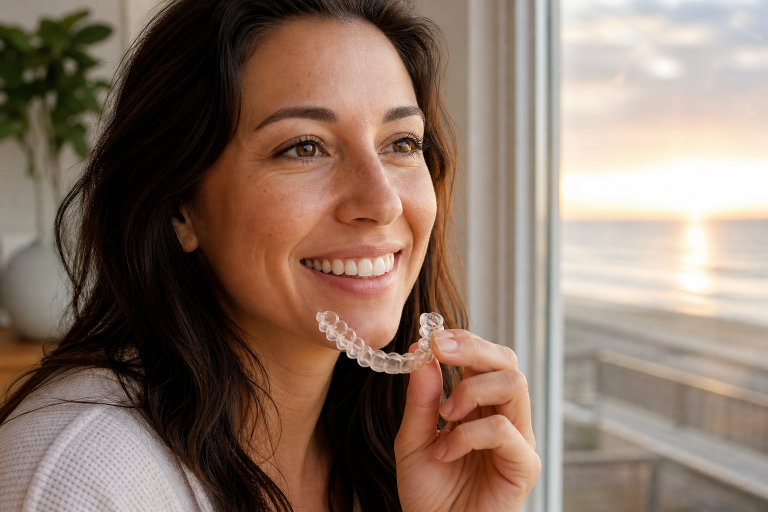
Clear aligners are custom-made, removable trays that fit over the teeth. Their low-profile appearance is a major draw for people who prefer an orthodontic option that may be less noticeable in conversations, photographs, classrooms, and professional settings. Because trays can generally be removed for meals and oral hygiene, patients do not need to brush around fixed brackets and wires. That flexibility also creates responsibility. Aligners only work as intended when worn as prescribed by the treating professional. The FDA’s guidance on clear dental aligners notes that these appliances are removable and typically supplied as a series of custom trays. They may suit many patients, but they are not automatically the best choice for every tooth or bite concern.
How Clear Aligners Work
Treatment usually begins with an examination of the teeth, gums, bite, and overall oral health. Digital scans, photographs, X-rays, or impressions may be used to plan tooth movement. From there, the patient receives a sequence of trays designed to apply controlled pressure over time. Each new aligner continues the planned movement in small stages. Teeth cannot be moved safely all at once because the surrounding bone and tissues need time to adapt. Follow-up visits allow the clinician to check fit, monitor progress, and decide whether the treatment plan needs adjustment.
Who May Be a Good Candidate?
A good candidate is not defined only by a desire for straighter teeth. An evaluation may consider mild or more significant crowding, gaps, overbites, underbites, crossbites, open bites, jaw development, and the condition of the gums and teeth.
Oral health comes first.
Untreated cavities, active gum disease, and other dental concerns may need care before orthodontic movement begins. A professional evaluation is especially important when considering at-home treatment options. The risks of DIY dentistry include overlooking dental conditions that can affect the safety and outcome of tooth movement.
What Daily Life With Aligners Looks Like
Most patients build aligner care into their existing routines. Trays are generally removed before eating, then placed in their protective case rather than wrapped in a napkin or set on a restaurant table. This matters on busy days in Virginia Beach, whether someone is commuting, attending classes, or spending time outdoors.
- Wear each tray for the hours recommended by the treating clinician.
- Remove trays before meals unless the clinician gives different instructions.
- Keep a case in a backpack, purse, desk drawer, or car bag.
- Rinse trays after removing them.
- Avoid leaving trays in a hot car, where heat may warp the plastic.
For example, a student may remove aligners at lunch and brush their teeth before putting them back in. A working adult may keep a spare case at the office to avoid placing trays loosely in a pocket during a meeting or meal.
Cleaning Teeth and Aligners
Removable trays do not replace brushing and flossing. Placing aligners over teeth with food debris or plaque can create an environment that is harder to keep clean. Brush twice daily with fluoride toothpaste, clean between teeth with floss or another clinician-recommended tool, and follow the provider’s instructions for cleaning the trays. Cool or lukewarm water is generally preferable for rinsing aligners. Hot water can distort plastic trays. Abrasive cleaners may scratch them, so patients should use only cleaning methods recommended by their dental professional or aligner manufacturer.
Clear Aligners Versus Traditional Braces
Neither option is universally better. The right choice depends on the movement needed and the patient’s ability to follow the plan.
- Appearance: Clear aligners are usually less noticeable, while braces use brackets and wires that remain visible on the teeth.
- Eating and cleaning: Aligners can generally be removed for meals and brushing. Braces stay attached, and some hard or sticky foods may need to be avoided.
- Daily responsibility: Aligners require reliable wear, careful storage, and timely tray changes. The patient cannot remove the braces.
- Suitability: Both can treat many orthodontic concerns, but some cases may be better managed with braces or another appliance.
Risks, Limits, and Common Mistakes
Clear aligners can be effective, but missed wear time, skipped appointments, lost trays, and poor cleaning can interfere with treatment. Eating while wearing trays when removal is advised can also damage or stain them. Contact the dental office if an aligner no longer fits, has a sharp edge, causes persistent pain, or if the bite seems to be changing unexpectedly.
Questions to Ask Before Treatment
- What tooth and bite movements are needed in my case?
- Are clear aligners appropriate for those movements?
- How often will progress be checked?
- Will attachments, elastics, or other appliances be needed?
- What happens if an aligner is lost, cracked, or does not fit?
- Does the quoted fee include refinements and retainers?
- Who should I contact if I have pain or a fit problem?
Treatment Time and Cost Factors
There is no single timeline or price for clear aligners in Virginia Beach. Treatment length and cost can vary with the complexity of the case, the number of trays, additional appliances, monitoring needs, replacement aligners, insurance benefits, and adherence to wear instructions. Request a written estimate that separates the active treatment fee, imaging, retainers, refinements, and possible replacement costs.
Why Retainers Still Matter
Finishing active aligner treatment does not mean the teeth stop changing. Retainers help hold teeth in their planned positions while surrounding tissues stabilize, and teeth can shift over time. Wear the retainer as directed, keep it clean and protected, and contact the office if it cracks, warps, or no longer fits comfortably.
Final Thoughts
Clear aligners can offer a discreet, flexible orthodontic option for many Virginia Beach patients who want to address concerns such as spacing, crowding, or certain bite issues. Their removable design can make eating, brushing, and maintaining daily routines more convenient, but it also requires consistent wear and proper care. The best outcome comes from more than the trays themselves. A careful evaluation can help determine whether aligners are appropriate for the patient’s specific dental needs and treatment goals. Good oral hygiene, following wear instructions, attending regular monitoring appointments, and addressing fit or comfort concerns promptly can all support the treatment process. Patients should also understand the expected costs, treatment timeline, potential refinements, and retainer requirements before starting treatment. With professional guidance and consistent daily habits, clear aligners can be incorporated into a practical orthodontic plan that supports long-term oral health and tooth alignment.
- How Can RV Travelers Find a Peaceful, Full-Hookup RV Park Near Greenville? Shibby RV Living Offers a Simpler Stay
- How to Compare Search, Scraping, Crawling, and Extraction Tools for AI Agents
- How To Build A Practical Home Medical Supply Plan For Safer Daily Care In Sarasota, Florida
- Andrew Sorial: Why Psychiatrists Should Collaborate with Other Healthcare Providers
- Medication Errors And Medical Malpractice Claims