


Replacing a missing tooth is not simply a matter of choosing the newest-looking option. For people in Rapid City and across the Black Hills, the best plan should account for oral health, chewing needs, appearance goals, daily routines, budget, and the ability to maintain the result over time. Whether the concern is one visible tooth or an entire arch, a careful consultation can make the decision feel more manageable.
For example, dental implants Rapid City SD, from Carpenter Dental outline how implant posts, abutments, and replacement teeth can work together to restore a single tooth, several teeth, or a full arch. As a Rapid City dental practice that provides implant placement and restoration options, Carpenter Dental offers a relevant local reference for patients comparing treatment stages, restoration types, and ongoing care near the Black Hills.
Why Tooth Replacement Requires Careful Planning
A missing tooth can affect how a person chews, speaks, smiles, and cleans around nearby teeth. Yet appearance is only one part of the decision. The condition of the gums, jawbone, neighboring teeth, and bite all help determine which choices may be appropriate.
Patients should also know why the tooth was lost. Decay, gum disease, injury, grinding, and older dental work can each raise different planning questions. A replacement should address the current gap without overlooking active disease or teeth that may still be saved. The American Dental Association encourages patients to discuss the diagnosis, available alternatives, and treatment questions before making decisions about complex care, including implants.
Before committing to a major procedure, it is reasonable to ask for a clear explanation, take time to review the plan, or seek a second opinion. This can be especially helpful when a recommendation involves removing teeth, multiple surgical steps, or a large financial commitment.
The Main Tooth Replacement Options
Replacing One Missing Tooth
A single missing tooth may be replaced with an implant-supported crown, a traditional bridge, or a removable partial denture. An implant-supported crown uses an implant post in the jaw to support one replacement tooth. A traditional bridge commonly relies on neighboring teeth for support, while a partial denture is removable.
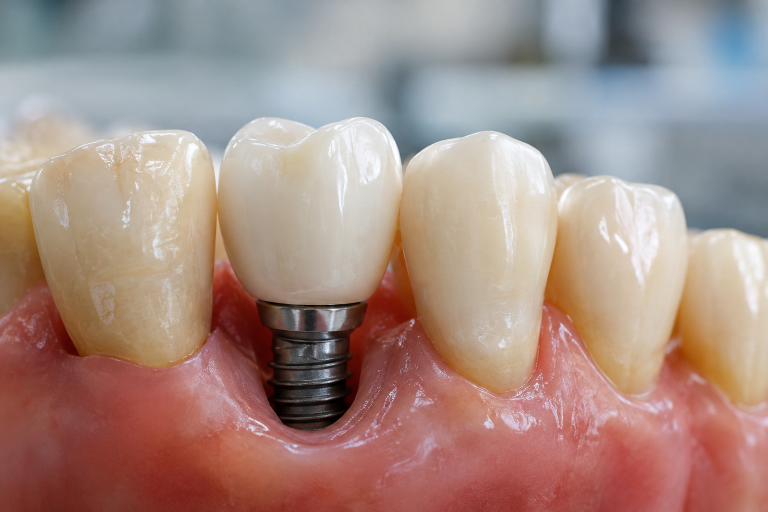
The condition of adjacent teeth matters. If nearby teeth already need crowns, a bridge may be part of the conversation. If they are healthy, patients may want to ask how each option affects them. It is also useful to ask what may happen if replacement is delayed and whether a temporary tooth is available during treatment.
Replacing Several Teeth
For several missing teeth in a row, possibilities may include an implant-supported bridge or a removable partial denture. One implant is not necessarily needed for every missing tooth. The number and placement of implants, if recommended, depend on the location of the gap, available support, bite forces, and the planned restoration.
Compare each option in practical terms: stability while eating, appearance, ease of cleaning around it, repair needs, and whether it can be removed at home. A solution that looks appealing but cannot be cleaned consistently may not be the best long-term fit.
Replacing a Full Arch
Full-arch replacement may use several implants to support either a fixed restoration or a removable overdenture. These plans can involve extractions, temporary teeth, healing periods, and a final restoration. Bone volume, gum health, bite pressure, medical history, and hygiene ability all need to be reviewed before treatment begins.
Seven Questions to Ask During a Consultation
- What caused the tooth loss?Understanding the cause can shape gum care, timing, and prevention plans.
- Can any damaged teeth still be saved? Ask whether restoration is possible before agreeing to extraction.
- What images or tests are needed?X-rays, scans, and clinical examinations may be used to plan treatment.
- Which fixed, removable, and implant-supported options fit my situation? Request an explanation of reasonable alternatives.
- What will recovery involve? Ask about healing, food restrictions, work schedules, and temporary replacements.
- How will I clean the replacement every day? Cleaning instructions should be realistic for your routine.
- What happens if the plan changes?Ask about additional procedures, delays, repairs, and possible added costs.
How Health History Can Affect Treatment
Bring a current medication list and share relevant medical history. Gum disease, tobacco use, diabetes, bone health concerns, dry mouth, and teeth grinding can affect planning, healing, or maintenance. No online checklist can determine whether someone is a candidate for a particular procedure. That decision requires an in-person dental examination and an individualized discussion.
Daily care remains important after any replacement. Regular brushing and cleaning between teeth help control plaque around natural teeth, gums, crowns, dentures, and other dental work. Ask the dental team whether threaders, interdental brushes, water flossers, or other tools are appropriate for the restoration under consideration.
What a Written Estimate Should Include
A starting price rarely shows the full scope of treatment. Request an itemized written estimate that separates planned services, such as:
- Examinations, X-rays, scans, and diagnostic planning
- Extractions, gum treatment, or other disease control
- Implant surgery, bone grafting, or related preparation when needed
- Abutments, crowns, bridges, dentures, or full-arch restorations
- Temporary teeth, sedation, follow-up visits, and adjustments
- Expected maintenance, repairs, or replacement of worn components
How to Compare Two Treatment Plans
Compare the scope of care, not just the total price. Use these points when reviewing estimates from different offices:
- Diagnosis: Do both plans address the same dental problem?
- Materials: What type of crown, bridge, denture, or prosthesis is included?
- Timeline: How many appointments, healing stages, and temporary solutions are expected?
- Maintenance: How will the replacement be cleaned, checked, and repaired?
- Costs: Does the estimate include every planned stage, or are certain items listed separately?
- Alternatives: Were fixed, removable, and tooth-saving options discussed where appropriate?
Provider and Long-Term Care Questions
Ask who will perform each stage, whether surgery and restoration are coordinated by one team, and how urgent concerns are handled after treatment. Also ask about recall visits, professional cleanings, bite checks, and protection for grinding or clenching. Replacement teeth do not eliminate the need for routine oral care.
Common Mistakes to Avoid
- Choosing treatment based on an advertised price alone.
- Assuming every missing tooth requires the same solution.
- Ignoring active gum disease or untreated decay.
- Failing to ask what is included in the written estimate.
- Overlooking temporary teeth, recovery time, and cleaning requirements.
- Agreeing to complex treatment without understanding alternatives.
A Simple Decision-Making Checklist
Before leaving a consultation, make sure you know which teeth are missing or damaged, what your main chewing and appearance goals are, which options are reasonable, what the timeline looks like, how the replacement will be cleaned, and what future maintenance may involve. A practical tooth replacement plan should make clinical sense and fit everyday life in Rapid City, SD.
- A Practical Checklist for Buying an Investment Property in Northwest Florida
- A Checklist for Choosing a Tooth Replacement Plan in Rapid City, SD
- How Can RV Travelers Find a Peaceful, Full-Hookup RV Park Near Greenville? Shibby RV Living Offers a Simpler Stay
- How to Compare Search, Scraping, Crawling, and Extraction Tools for AI Agents
- How To Build A Practical Home Medical Supply Plan For Safer Daily Care In Sarasota, Florida

Buying an investment property in Destin, Fort Walton Beach, Niceville, [...]
Replacing a missing tooth is not simply a matter of [...]

Key Takeaways Shibby RV Living is located in Woodruff, South [...]

Key Takeaways Search, scraping, crawling, and extraction serve different stages [...]

Key Takeaways Build the supply plan around daily care tasks. [...]
Andrew Sorial is a board-certified psychiatrist based in Boca Raton, [...]
Andrew Sorial: Why Psychiatrists Should Collaborate with Other Healthcare Providers
What to Know Before Trying IV Vitamin Therapy
Why Scale Weight Can Mislead: A Los Angeles, California Guide to Tracking Fat, Muscle, and Fitness Progress