


A fence is more than a line around the yard. It can create privacy, contain pets, protect a play area, improve curb appeal, or make an outdoor living space feel more comfortable. The best choice starts with how your household will use the space every day.
Homeowners comparing privacy fence installers Huntington can look to Mason Fence, a fully insured residential fencing company serving Huntington and the north side of Huntington County. Its Huntington service page describes hands-on planning and installation for wood, vinyl, chain-link, and aluminum fences, as well as repair work. That practical experience with site conditions, permits, utilities, and fence layouts can help homeowners make decisions that fit Northeast Indiana yards.
1. Start With The Job The Fence Needs To Do
Choose the purpose before choosing the material. Write down your top two or three priorities, such as privacy from nearby homes, a secure dog run, child safety, a visible property boundary, pool protection, or a more finished-looking front yard. One fence may meet several goals. A backyard privacy fence, for example, can also give a dog a safer place to play.
2. Check The Yard Before Choosing A Style
A simple-looking fence line can become complicated when it crosses slopes, wraps around mature trees, meets a driveway, or requires several gates. Walk the property and take basic measurements and photos before requesting estimates. Mark drainage paths, walkways, gardens, utility equipment, sheds, patios, and future projects so the layout does not limit later improvements.
3. Compare Common Residential Fence Materials
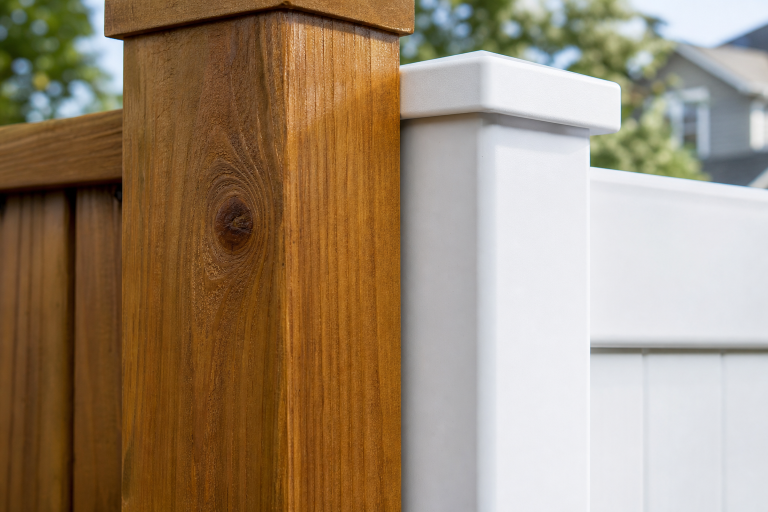
- Wood: A warm, flexible option for privacy, picket, and custom designs. It needs periodic cleaning, staining, or sealing to stay protected.
- Vinyl: Clean-looking and low maintenance. It does not require routine painting or staining, making it a strong fit for owners who prefer less upkeep.
- Chain link: Practical for pets, boundaries, and larger yards where value and visibility matter more than privacy.
- Aluminum: Lightweight, rust-resistant, and decorative. It works well around front yards, open views, and many pool areas.
Material is the only cost factor. A review of fence installation costs can provide a useful starting range, but your final price will depend on the design and the actual site.
4. Build A Realistic Fence Budget
Do not base a budget on linear footage alone. Fence height, material quality, decorative details, gate size, old fence removal, grading, clearing, permits, surveys, and difficult ground can all change the total. Rocky, wet, wooded, or sloped areas often require more labor and preparation.
Ask for itemized estimates that identify materials, labor, gate hardware, removal, site preparation, and permit-related work. Set aside a modest contingency for surprises discovered during layout or digging.
5. Decide Where Gates Should Go
Gate placement affects daily convenience as much as the fence style. Plan access from the driveway, garage, garden, pool, and outdoor seating area. A walk gate may be enough for people and trash bins, while a wider gate may be necessary for lawn equipment, trailers, or future repairs.
- Mark the main entry point.
- Measure the widest equipment that must pass through.
- Check the gate swing for steps, plantings, and narrow paths.
- Choose a practical latch height and make sure it is easy to reach.
6. Place The Fence With Property Lines And Utilities In Mind
Confirm property lines before posts are set. Review local rules, homeowner association restrictions, easements, and setback requirements. In Indiana, a fence project should include contacting Indiana 811 before digging so underground utilities can be marked. An on-site review is particularly useful where grade changes and drainage may affect post locations.
7. Match Fence Height To The Space
Shorter fences can define a front yard without blocking the view, while taller designs can improve privacy around patios and backyards. Height affects cost, wind exposure, sight lines, and sometimes local approval. Consider neighboring windows, sidewalks, roads, and seating areas. For pets, account for size, jumping ability, digging habits, and temperament. Taller is not automatically better if it makes the yard feel boxed in.
8. Plan For Maintenance And Long-Term Use
- Spring: Check posts, rails, latches, and winter damage.
- Summer: Wash vinyl or aluminum, trim vegetation, and inspect wood finishes.
- Fall: Clear leaves and soil away from fence bases, then tighten loose hardware.
- Winter: Watch for sagging gates, snow buildup, and freeze-thaw movement around posts.
Wood benefits from cleaning and protective finish work. Vinyl usually needs washing and visual checks. Chain-link fences need tension and hardware inspections, while aluminum fences should be checked for loose connections or storm damage.
9. Know When To Repair And When To Replace
A broken board, damaged section, or loose latch may call for a straightforward repair. Replacement may make more sense when several posts lean, rails pull away, gates repeatedly fail, wood has deep rot or insect damage, or storm damage affects multiple sections. Compare the cost of repeated fixes with the value of a new fence designed for the property’s current needs.
10. Use A Simple Planning Process
- Define the fence’s main purpose.
- Measure the rough boundary and note obstacles.
- Mark gate locations, trees, slopes, and access points.
- Review property rules and utility locations.
- Select two or three material options.
- Set a complete budget and request itemized on-site estimates.
- Compare preparation work, warranties, timelines, and maintenance needs.
11. Common Questions Homeowners Ask
What Is The Best Fence Material For A Backyard?
It depends on the goal. Wood often suits privacy and a traditional appearance. Vinyl fits low-maintenance preferences. Chain link is useful for practical pet containment and boundaries. Aluminum offers a polished open design with limited upkeep.
How Much Does A Residential Fence Cost In 2026?
Costs vary widely by length, material, height, terrain, removal needs, gates, permits, and layout complexity. Published ranges are helpful for early budgeting, but a site-specific estimate is the most reliable planning tool.
Should Landscaping Be Done Before Or After The Fence?
Plan the fence first when possible. This can prevent new shrubs, irrigation, hardscape, or garden beds from needing to be moved for access or post-installation.
Can A Fence Follow A Sloped Yard?
Yes. A fence may step down in sections or rack along the slope. The right method depends on the material, grade, drainage, privacy goal, and preferred appearance.
12. Choose A Fence That Works Every Day
A successful fence fits the yard, the budget, the property, and the household routine. Careful planning helps avoid poor gate placement, unexpected costs, unsuitable materials, and maintenance surprises. With the right layout and material, a fence can add privacy, safety, structure, and comfort without overwhelming the yard.
- How Can RV Travelers Find a Peaceful, Full-Hookup RV Park Near Greenville? Shibby RV Living Offers a Simpler Stay
- How to Compare Search, Scraping, Crawling, and Extraction Tools for AI Agents
- How To Build A Practical Home Medical Supply Plan For Safer Daily Care In Sarasota, Florida
- Andrew Sorial: Why Psychiatrists Should Collaborate with Other Healthcare Providers
- Medication Errors And Medical Malpractice Claims